Blog
Interior Demolition in Hampton Roads: Costs, Permits, and What to Expect
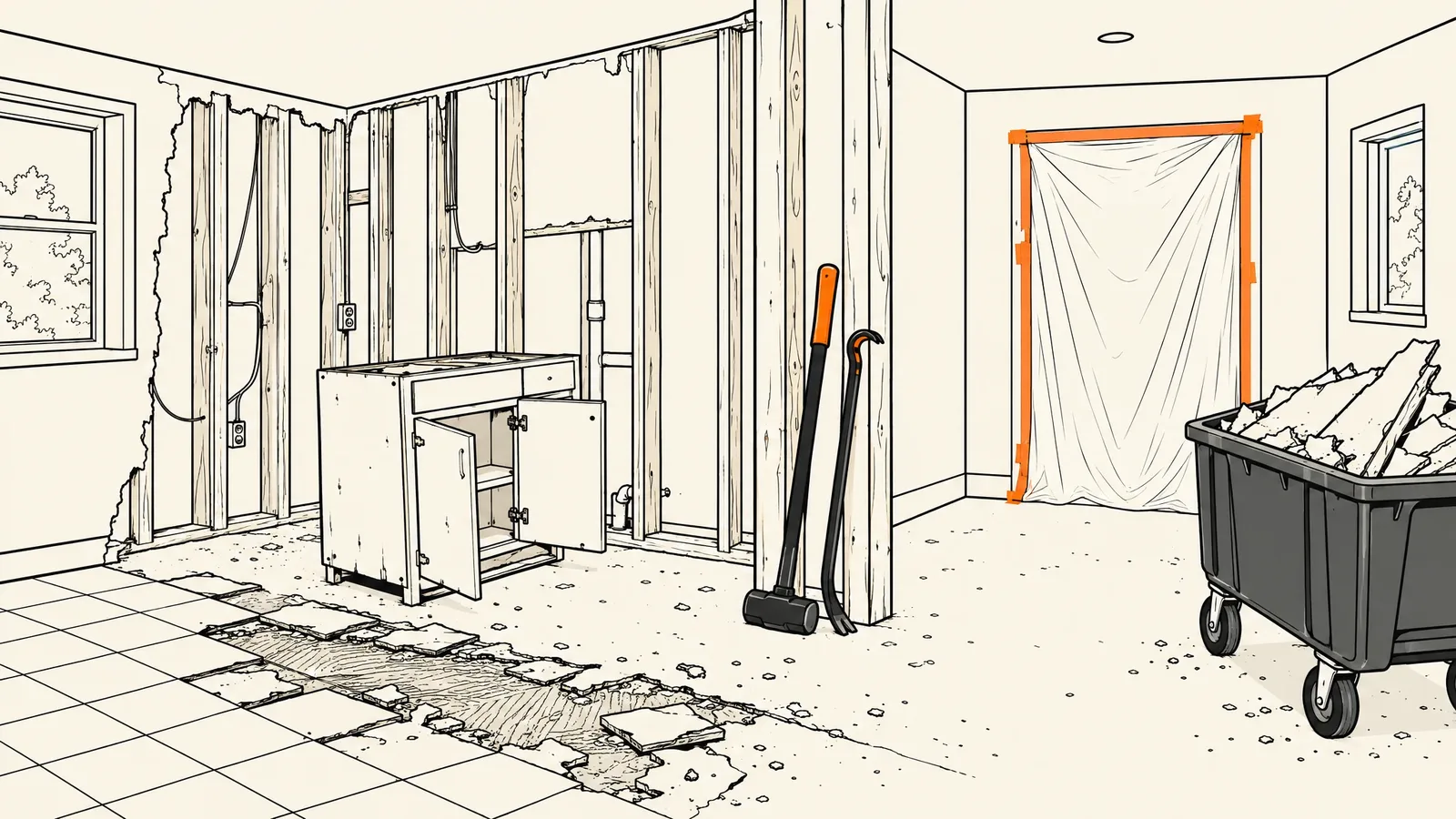
Interior demolition removes what you no longer want inside a building, such as walls, cabinets, countertops, flooring, tile, drywall and fixtures, while keeping the structure and the parts you plan to reuse. It is the first step of most kitchen, bathroom and whole-house remodels in Hampton Roads.
This guide covers what the work includes, what it typically costs, which permits and safety rules apply in Virginia, and how to get a room ready for the trades that come next.
What interior demolition includes
Interior demo is selective. The crew removes only what is in the written scope and protects everything else. On a typical residential job, that scope can include:
Wall removal: partition walls and drywall taken down to the framing or removed completely.
Cabinets and countertops: upper and lower cabinets, vanities, and laminate, stone or composite counters.
Flooring: tile, carpet, hardwood and laminate pulled up down to the subfloor.
Fixtures: light fixtures, ceiling fans, tubs, showers and toilets, after utilities are shut off and disconnected.
Debris haul-off and cleanup: loading, hauling and disposing of everything removed, then leaving the space broom-clean.
Haul-off is where many quotes differ. A demo-only price leaves the debris pile for you to deal with. Mr Demo Pro's interior demolition service includes debris removal and cleanup so the space is ready for framing, plumbing, electrical or install teams.
How much does interior demolition cost?
National cost data from HomeGuide's 2026 interior demolition cost guide puts interior demo at $2 to $8 per square foot, or about $1,000 to $5,000 for an average project. Typical ranges by project:
| Project | Typical national cost |
|---|---|
| Interior wall | $0.50 to $1.50 per sq ft |
| Floor | $1.50 to $3.50 per sq ft |
| Ceiling | $1.50 to $3.00 per sq ft |
| Kitchen | $500 to $2,500 |
| Bathroom | $600 to $2,000 |
| Bedroom or living room | $200 to $1,600 |
Treat those numbers as a starting point, not a local quote. Hampton Roads labor and disposal rates differ from national averages, and every house is different. Mr Demo Pro prices interior demolition per project, based on the scope, the amount of debris to dispose of, and how much protection the rest of the house needs. Estimates are free.
What changes the price
Scope: one bathroom costs far less than a full gut to the studs.
Materials: glued-down flooring, mortar-set tile and stone counters take more labor than carpet or laminate.
Debris volume and weight: disposal is charged by weight, so tile and plaster cost more to haul than drywall.
Access: second floors, narrow halls and long carries to the truck add time.
Protection: occupied homes need dust barriers and floor protection around the work area.
Age of the home: older homes are more likely to need asbestos or lead checks before work starts.
Permits and safety rules in Virginia
Most interior demo needs some paperwork. Here is what applies before anything comes down.
Building permits
Cutting into walls usually triggers a permit. The City of Virginia Beach, for example, requires a residential permit for cutting away any wall, partition or portion of the building, removing or cutting any structural beam, and changing a required means of egress. Other Hampton Roads cities follow the same Virginia construction code, so check with your city's building department before work starts.
Load-bearing walls
Never treat a wall as non-structural without confirmation. A load-bearing wall needs a plan from a structural engineer or architect, plus temporary support and a new beam, before it can be removed. Mention any wall you want gone during your estimate so it can be identified and scoped correctly.
Asbestos in older buildings
Under Virginia Code § 36-99.7, a local building department will not issue a renovation or demolition permit for a building first permitted before January 1, 1985 until a licensed inspector checks the affected areas for asbestos. Single-family homes and buildings with four or fewer units are exempt unless the work is for commercial or public development. Even when the rule does not apply, older flooring, ceiling texture and pipe insulation can contain asbestos, so testing before demo is a smart step in older homes.
Lead paint in pre-1978 homes
The EPA's Renovation, Repair and Painting (RRP) rule requires anyone paid to disturb painted surfaces in a home built before 1978 to be certified and to use lead-safe work practices. According to the EPA, the rule covers removing walls and ceilings and applies when work disturbs more than six square feet of interior painted surface. It also applies to landlords and house flippers, not just contractors.
Kitchen and bathroom demolition for remodels
Kitchens and bathrooms are the most common interior demo jobs, and they take the most planning. Both rooms have plumbing, heavy fixtures and tile, and both usually sit next to spaces you want to keep clean.
Kitchen demolition typically covers cabinet and countertop removal, tile, flooring and drywall removal, coordination of appliance disconnects, and debris haul-off.
Bathroom demolition typically covers vanities, tubs, showers, toilets, tile and flooring, with the water shut off and lines capped first.
The key is a clear line between what goes and what stays. If you are keeping the tub, the window trim or the hardwood in the next room, say so up front so the crew can protect it. Business owners can find the commercial version of this work on our commercial interior demolition page.
How an interior demo job works
Share the remodel scope. Tell us what is staying and what is going so the crew can plan a selective approach.
Site prep and protection. The crew preps the work area, protects adjacent rooms, and confirms access and timing.
Demolition and removal. Cabinets, counters, flooring and fixtures come out while debris stays controlled.
Cleanup, ready to build. Debris is hauled off and the room is left ready for the next trade.
Before demo day, clear the room of furniture and valuables, confirm permits and any required inspections, and make sure the water, gas and power to the work area are shut off or scheduled to be disconnected.
DIY or hire a pro?
Pulling up carpet in one room is a reasonable weekend project. Gutting a kitchen is different. It means heavy debris, disposal logistics, hidden wiring and plumbing, and the permit and safety rules above. If you are weighing the two, our DIY vs. pro demolition guide walks through the trade-offs.
Interior demolition FAQ
Do I need a permit for interior demolition in Hampton Roads?
Often, yes. Removing or cutting walls, cutting structural beams and changing exits usually require a residential building permit. Check with your city's building department before work begins.
Can a load-bearing wall be removed?
Yes, with an engineered plan, temporary support and a new beam. It also requires a permit. Flag any wall you want removed during your estimate.
Can you leave cabinets, flooring or fixtures I want to keep?
Yes. Interior demolition is selective, and anything you want to keep goes on the written scope so the crew can protect it.
Is debris removal included?
Mr Demo Pro's interior demolition includes debris haul-off and cleanup. When comparing quotes from other companies, confirm whether disposal is included or billed separately.
Which areas do you serve?
Mr Demo Pro provides interior demolition across Hampton Roads, including Hampton, Newport News, Norfolk and Yorktown. See our service area page for the full list.
Get a free interior demolition estimate
Mr Demo Pro is licensed and insured, and every estimate is free with no obligation. Tell us what is coming out and what is staying, and we will quote the job. Call 757-848-4559 or request a free quote online.
Want more insights?
Reach out for a consultation or subscribe to our updates.